

Setting up a PT PMA: what to decide before you incorporate
Business lines, ownership and capital shape everything that follows. A guide to the decisions worth settling before the deed is signed.
Read the guide
What foreigners and foreign-owned companies can hold, from a home to a factory site, and the checks to run before you sign.
Foreigners cannot hold freehold land title (Hak Milik) in Indonesia, and neither can a foreign-owned company. That rule shapes every property decision a foreign investor makes, whether the need is a home, an office, a warehouse, a factory or a plot of land. There are legitimate routes for each. Which one fits depends on what you need the property for and who will hold it.
| What you need | Usual route | Key condition |
|---|---|---|
| A home to live in | Right of use (Hak Pakai) held by you | Valid stay permit and a regional minimum price |
| Office, shop or warehouse | Lease, or right to build (HGB) held by your PT PMA | Use must match the company's business lines and the zoning |
| Factory | Plot in an industrial estate, or HGB where an exception applies | Many manufacturing activities must be in an estate |
| Land for a project | HGB held by your PT PMA | Business use, zoning and licences |
A foreign individual with a valid Indonesian stay permit can hold a house or apartment under Hak Pakai, a right-of-use title. It is granted for an initial period and can be extended and renewed, so the total term can run for several decades depending on the underlying title.
Foreign buyers also face a minimum purchase price set by region. In Bali, for example, published guidance points to around IDR 5 billion for a landed house and IDR 2 billion for an apartment unit. Check the current threshold for your region with the land office or a notary before you shortlist properties.
Most foreign-owned companies lease their commercial space, at least at first. A lease is quick to arrange and keeps capital in the business. What matters is the contract: its term, extension rights, what happens if the owner sells, and whether the landlord's own title supports the lease you are signing.
A PT PMA can also buy commercial property and hold it under HGB, the right to build, provided the property is used for the company's registered business. The address also needs to suit your licences: a warehouse, for example, needs a location whose zoning allows warehousing.
Under Government Regulation No. 20 of 2024, industrial companies are generally required to locate in an industrial estate, with limited exceptions. Whether your activity must be inside an estate depends on its business line (KBLI) and the local zoning, so confirm this before you look at any standalone site.
Estate plots are usually held under HGB granted on top of the estate operator's management right. That means the operator's consent is typically needed for transfers, extensions and renewals. Read those terms as carefully as the price. Estates often provide ready infrastructure and can come with licensing support or incentives.
A PT PMA can acquire land under HGB for its business plans. HGB is granted for an initial term that can be extended and renewed. If the land currently has a freehold certificate, it must be converted to HGB through a notary and the land office as part of the purchase.
Nominee structures, where an Indonesian citizen holds the title on a foreigner's behalf, are not legally recognised and leave the foreign party with little protection. Treat any proposal built on a nominee as a warning sign.
Decide first what the property is for and who should hold it: you personally, or your company. That points to Hak Pakai, HGB or a lease. From there, due diligence on the specific property protects the decision. See our Legal & Corporate services for property due diligence and transaction support.
This note is general information, not legal or tax advice. Regulations in Indonesia change often, so confirm the current requirements for your situation before acting.
Notes on entering and operating in Indonesia, written for investors weighing their next step.
Business lines, ownership and capital shape everything that follows. A guide to the decisions worth settling before the deed is signed.
Read the guide
How your position in the company decides the permit you need, and what each one allows you to do in Indonesia.
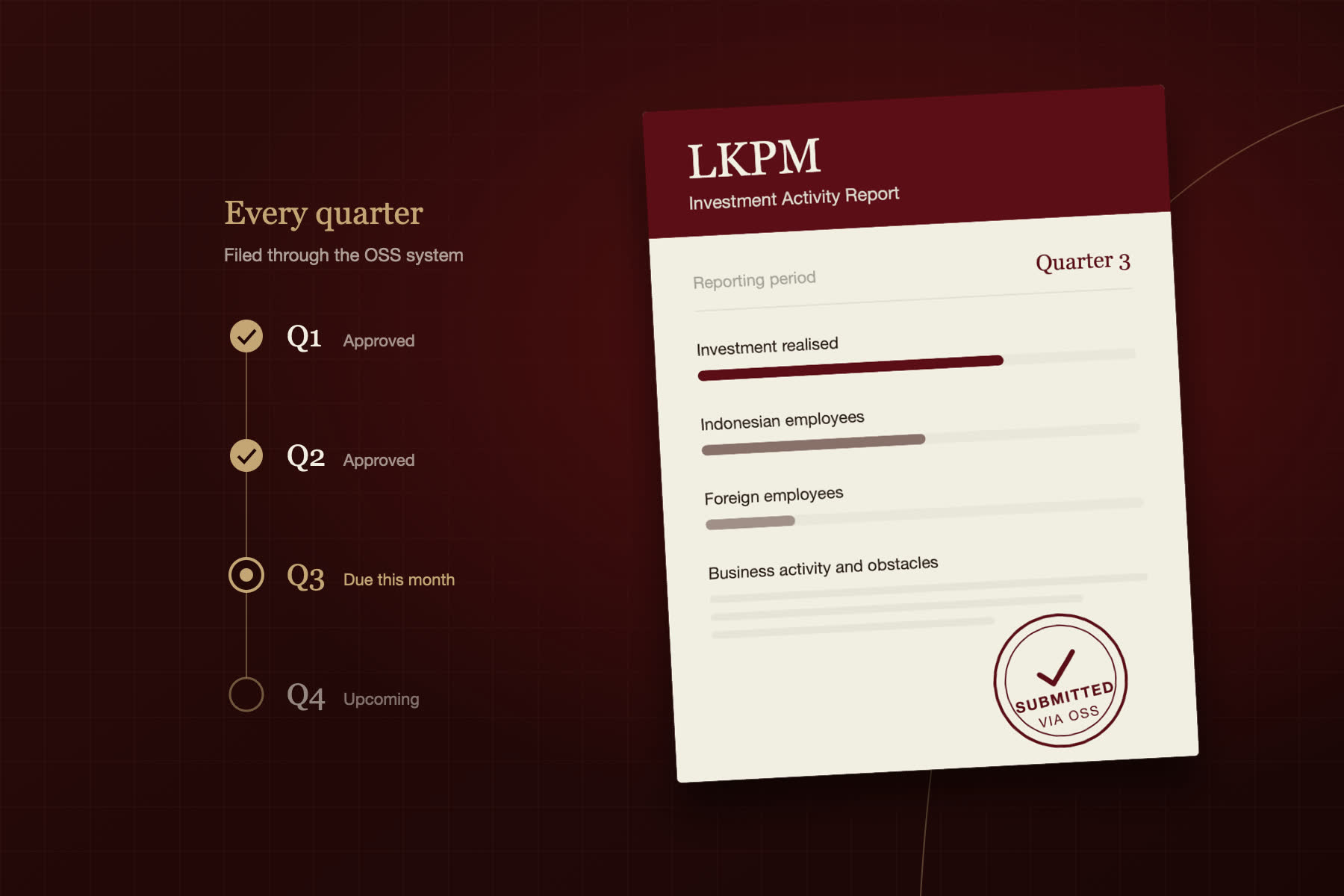
What the investment activity report covers, who must submit it, and how to keep it on schedule.
If you are evaluating Indonesia, preparing to enter, or reviewing your advisory needs, we welcome a conversation about your objectives.